
Moments When Nature Spoke and We Listened
A journey across ages that tracks the turning points where questions became knowledge and notes became laws
Counting bones and the first measures of time
Long before cities, hands carved notches on bones to tally animals, seasons, and debts, and these quiet marks trained minds to track patterns in a world that seemed ruled by chance. People learned that the moon repeats, that shadows shorten and lengthen, and that migratory herds move with a rhythm that can be remembered. Knowledge began as attention, and attention became prediction, which is the seed of every later science.
Fire, clay, and the chemistry of daily life
Control of fire taught communities how heat changes matter, wet clay dried into vessels, ore in charcoal beds turned to bright metal, and glazes transformed sand and ash into color. No theory yet claimed these feats, but repeated success built confidence that natural processes could be guided on purpose. Crafts became experiments, recipes became protocols, and guild memory became a library without shelves.
Stars over temples and the birth of calendars
Priests in early river kingdoms watched the dawn position of bright stars and recorded floods that answered those skies, and from these notes came calendars that matched planting to water and festivals to the return of light. Astronomy began as agriculture measured by heaven, a practical art that fixed time with such precision that stones and rituals still align with sky paths to this day.
Greek questions and the geometry of proof
Scholars in Ionian towns asked whether the world could be described by reasons rather than stories, and their heirs built geometry as a ladder of statements that rise from axiom to theorem. Euclid gave a method for certainty, Archimedes mixed measure with imagination, and physicians in Hippocratic schools argued that disease has natural causes. Explanation became a craft that anyone could test with logic and with sight.
Alexandrian instruments and the library of air and water
Engineers in Alexandria built devices that used pressure and steam for theater and study, and scholars compared texts from many lands to reconcile conflicting claims. The museum and library turned curiosity into a civic vocation. Tools such as the water clock and the astrolabe changed from toys into standards, because measured time and measured angles let arguments leave the realm of opinion and enter the realm of number.
Scholars of the eastern deserts and the translation of wonder
In cities from Baghdad to Cordoba, polymaths gathered Greek, Persian, and Indian texts, then tested them against the sky, the clinic, and the workshop. Algebra gained symbolic strength, optics learned that vision involves light entering the eye, and hospitals recorded case histories that taught future physicians how to reason from evidence. Paper turned fragile memory into durable instruction, and experimental habit kept pride from freezing into dogma.
Compasses, lenses, and the workshop school
Artisans in Europe and Asia refined magnetic needles for travel and shaped glass into spectacles and simple magnifiers. Mariners learned to trust a needle when clouds hid the sky, and scholars learned that a glass disk can extend the reach of the eye. Instruments moved from curiosity to necessity, a transition that always signals a discovery has become infrastructure.
The printing press and the new speed of ideas
Movable type turned rare manuscripts into common books, and that flood of pages changed science by allowing wide critique and rapid reply. Errors met correction, lonely insights met partners, and a study in one town could shape a procedure in another before a season turned. The page became a laboratory bench that traveled, and peer communities began to form without needing walls.
Heavenly motion and the rearranged universe
When careful observers noticed that the planets wander in ways that defy simple circles, they tried new models and accepted that the sun rather than the earth may sit near the center. Telescopes revealed mountains on the moon and moons around distant worlds, proof that nature does not honor old hierarchies. Mathematics and measurement took the throne from tradition, and the sky became a realm that obeys the same rules as the ground.
Falling apples and the union of heaven and earth
A single framework joined terrestrial motion with celestial motion, and in that union physics found its first grand synthesis. Mass attracted mass with a force that could be written in a line of symbols, and that line explained tides, comets, and the path of a tossed stone. The new mechanics made prediction routine, which turned astronomy and engineering into siblings.
Microscopes, blood circulation, and the theater of the small
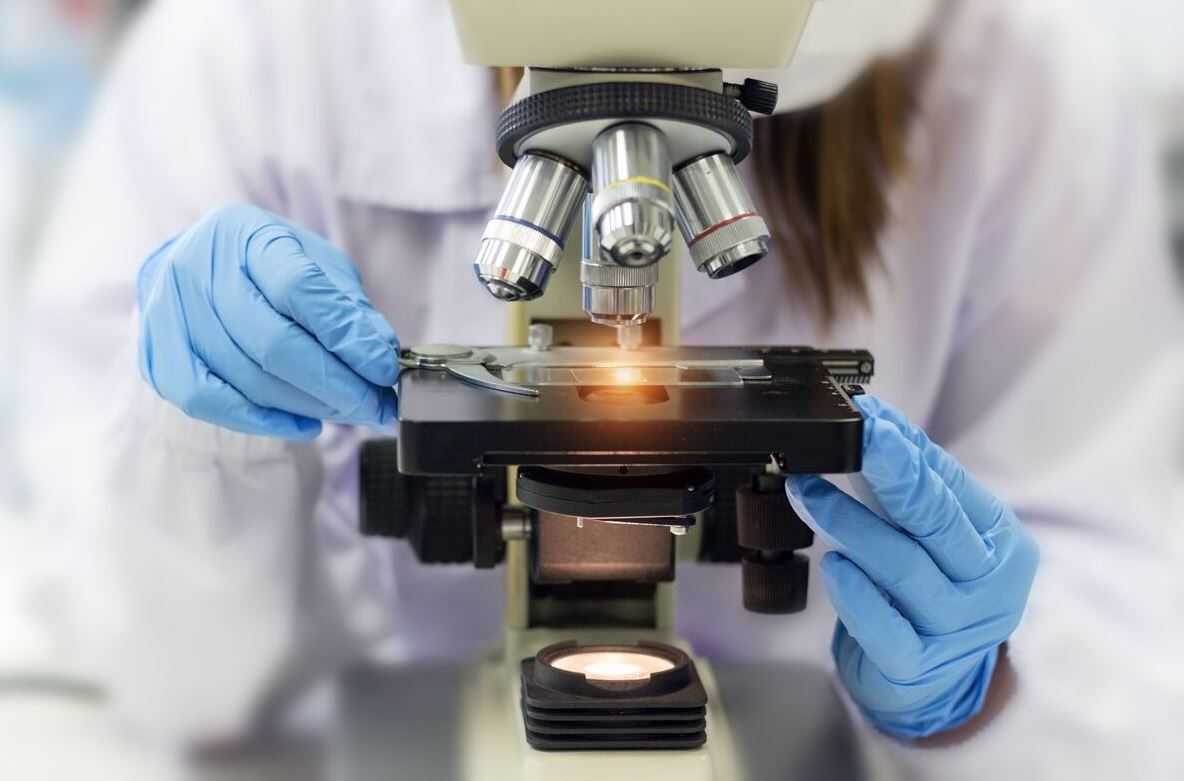
Glass improved until living tissues opened their hidden architecture to patient eyes, and tiny creatures swimming in droplets proved that life teems beyond unaided sight. Physicians traced the loop of blood from heart to artery to vein, a circuit that replaced guesswork with anatomy. Biology began to walk the same road physics had found, the road where description yields to mechanism.
Calculus and the language of change
Mathematicians built a method to tame curves, to measure rates, and to sum the unbroken. With this tool, motion, growth, and waves became solvable problems rather than puzzles to be sketched. The method spread to astronomy, hydraulics, and later to electricity, and every field it entered became more precise, because change itself now had grammar.
Air pumps, heat, and the measure of work
Researchers evacuated vessels to weigh the spring of air, boiled water under lids to test expansion, and compared temperatures with scales that allowed agreement across rooms and across nations. From these trials grew the science of heat and engines, which taught that energy changes form but does not vanish. This lesson empowered factories, ships, and eventually power grids, and it also introduced limits that genius cannot break, limits that protect truth from miracle claims.
Electric sparks and the woven field
Kite experiments, batteries, and coils revealed that electric charge and magnetic influence are aspects of one field spread through space. Equations captured how waves of this field travel with a finite speed, and light itself became a vibration of that medium. The telegraph, the motor, and the radio followed, practical proof that elegant mathematics can steer copper and iron into service for speech and motion.
Stones that whisper time and the history of life
Fossils once thought to be tricks of stone became evidence of vanished creatures, and layered rocks turned into pages of a book that charts deep time. Naturalists mapped the distribution of species across islands and continents, and from patterns of similarity they inferred common ancestry. The story of life shifted from static design to branching descent, and selection by survival and reproduction gave that branching a cause rooted in everyday struggle.
Germs, anesthesia, and the new covenant in hospitals
Microscopes and careful statistics revealed that invisible organisms spread disease, and washing of hands and tools saved lives before anyone saw the culprits clearly. Anesthesia allowed surgeons to work with patience and precision, transforming operating rooms from places of speed to places of craft. Public health gained the power to prevent rather than merely to mourn, and medicine began to share the rigor that had transformed physics.
Elements arranged and the periodic promise
Chemists sorted substances by weight and reactivity until a periodic table emerged that predicted missing entries with elegant confidence. When those entries were found, the table became not only a catalog but a theory in disguise. It told where new metals should fit, how valence behaves, and why families of elements share temperament. Order replaced a long list of recipes, and laboratories gained a map that pointed toward discovery rather than away from it.
Quanta, uncertainty, and the strange interior of matter
Spectral lines, black body curves, and the photoelectric effect forced a new idea, that energy sometimes arrives in packets and that particles sometimes act like waves. Atomic models gave way to orbitals described by probability rather than by path. The small world refused classical intuition, yet it yielded devices of enormous reliability, from lasers to transistors. Philosophy reeled, engineering thrived, and the lesson stood firm, that nature honors mathematics even when imagination hesitates.
Relativity and the malleable fabric of space and time
Clocks on fast trains tick differently from clocks at rest, and gravity bends light as well as path. Space and time, long treated as separate, fused into a single stage that curves around mass and energy. Predictions about the precession of planets and the redshift of starlight survived severe tests. Cosmology was born as a quantitative science, ready to weigh the universe and to ask if it had a beginning.
DNA, the genetic code, and the script of the cell
Careful chemistry and sharp diffraction images revealed a double helix that carries instructions in four letters. Enzymes copy this script with high fidelity, and mutations edit it with errors that become raw material for evolution. Translation from nucleic acid to protein gave life a central dogma, and laboratories learned to cut and paste sequences with tools that grew ever more precise. Medicine and agriculture stepped into a new era where diagnosis can read the book of inheritance line by line.
Expanding universe and the echo of ancient light
Observations of distant galaxies showed that space itself stretches, and microwave signals that fill the sky arrived as the cooled remnant of a hot early state. Models of cosmology matured from speculation into measurement, with parameters that can be fitted from surveys and satellites. The universe gained an age, a composition, and a history in which stars forge elements and gravity sculpts structure from initial ripples.
Plates that drift and the engine beneath continents
Magnetic stripes on ocean floors and precise fits of fossils across seas revealed that continents move on a convecting mantle. Mountains rise where plates collide, trenches open where plates sink, and earthquakes trace boundaries like stitches on a globe. Geology found a unifying mechanism that linked volcanoes, coastlines, and mineral deposits, and prediction of hazards gained a framework that saves lives through codes and planning.
Transistors, information theory, and the age of code
Quantum tuned switches and mathematical limits on communication transformed computation from room sized calculators into devices that fit in a pocket. Logic gates multiplied into processors, error correcting codes made unreliable channels trustworthy, and networks linked machines into a global library. Science itself changed pace, because simulation and data analysis joined theory and experiment as equal partners in discovery.
Lasers, atomic clocks, and the art of precision
Coherent light sharpened measurement, etched circuits, and measured distances to the moon, while clocks that count atomic vibrations set time with a stability that guides navigation and finance. Metrology turned constants into definitions, anchoring units to properties of nature rather than to artifacts. Precision became a path to new effects, since subtle differences reveal fresh physics when tools can resolve them.
Neuroscience and the maps inside the skull
Electrodes, dyes, and imaging revealed that perception, memory, and action arise from networks that pulse with orchestrated activity. Cells wire with rules that learning can rewrite, senses fuse to build a coherent world, and tiny chemical messengers tune mood and attention. The brain became a terrain that science can chart without denying its mystery, and medicine gained treatments rooted in circuits rather than in superstition.
Climate science and the ledger of heat
Ice cores, tree rings, and satellite spectra tell a consistent story, that greenhouse gases trap energy, that oceans absorb and move this burden, and that human industry has pushed the system beyond recent norms. Models tested against past climates project futures that depend on choices in policy and design. The discovery here is not a gadget but a responsibility, the knowledge that chemistry and physics extend into ethics.
CRISPR and the return of the editor
A bacterial defense system became a programmable tool that can cut specific DNA sequences and invite repairs that rewrite function. Biologists can now correct mutations, build disease models, and aim gene drives at pests, while ethicists and lawmakers weigh benefits against risk. Precision that once belonged to text now belongs to life, and society must decide how to use an eraser that can also write.
Gravitational waves and the ears of spacetime
Detectors that compare laser lengths across long tunnels listened for ripples from colliding black holes and heard them at last, a tiny change that confirmed a century old prediction. Astronomy gained a new sense, able to read events that light cannot easily show. With each detection, models of massive objects grow sharper, and the story of star death and merger gains chapters that no telescope alone could supply.
Quantum information and the puzzle of entanglement
Experiments that close loopholes show that particles share correlations no local theory can explain, and engineers use this strangeness to build secure links and nascent computers that promise speed on special problems. Information becomes a physical quantity with limits and costs, and physics returns to philosophy with fresh humility, because what we can know is shaped by how the world allows us to ask.
Artificial intelligence and the telescope for patterns
Algorithms that learn from data now classify galaxies, predict protein shapes, and guide instruments to interesting events in real time. These tools accelerate discovery by sifting haystacks for needles that human eyes would miss, yet they also demand transparency, because a black box can mislead with confidence. The partnership between human insight and machine search recasts the scientific method as a duet, hypothesis and training set working in concert.
Citizen science and the widening circle of observers
Smartphones, cheap sensors, and open platforms let communities count birds, map pollen, track earthquakes, and monitor water quality. Discovery leaves the lab and walks streets and fields where people live, and in return science gains scale and trust. Crowds do not replace expertise, they extend it, and the timeline of discovery acquires millions of small hands that hold vast projects steady.
Interdisciplinary bridges and the end of silos
Boundaries between fields blur as tools and questions overlap, chemists design materials with biological motifs, physicists write models for ecosystems, and historians use data methods to track cultural change. Progress accelerates when language barriers fall, and journals reward collaboration that once seemed unlikely. The map of knowledge becomes a mesh rather than a grid, and ideas diffuse across it like heat.
Replication, open data, and the health of the method
Science corrects itself when peers can repeat and extend findings, and digital archives make raw data and code available for inspection. Failures to replicate are not scandals when they lead to better practice, preregistration and careful statistics discourage wishful thinking, and incentives shift toward reliability. The discovery here is meta, a recognition that trust is built by habits that invite scrutiny.
What tomorrow may add to the ledger
New detectors will listen for particles that make up dark matter, telescopes will image exoplanet atmospheres for hints of life, fusion reactors will test whether a star can be coaxed into a bottle, and quantum networks will attempt long distance entanglement without fragility. Each success will pose new questions, because the frontier recedes as quickly as it is reached. The true constant in the timeline is not a law of nature, it is the human willingness to keep asking.
The thread that ties questions to generations
From tally marks in caves to signals from colliding stars, discovery advances when patience meets curiosity and when tools meet doubt. Every era inherits questions and leaves better ones behind, every breakthrough becomes ordinary as students learn it by heart, and every ordinary lesson becomes the floor for a new climb. The timeline of science is not a line at all, it is a braid of minds across centuries, holding fast so that the next hand finds a surer grip.