

Marks That Taught Memory to Speak
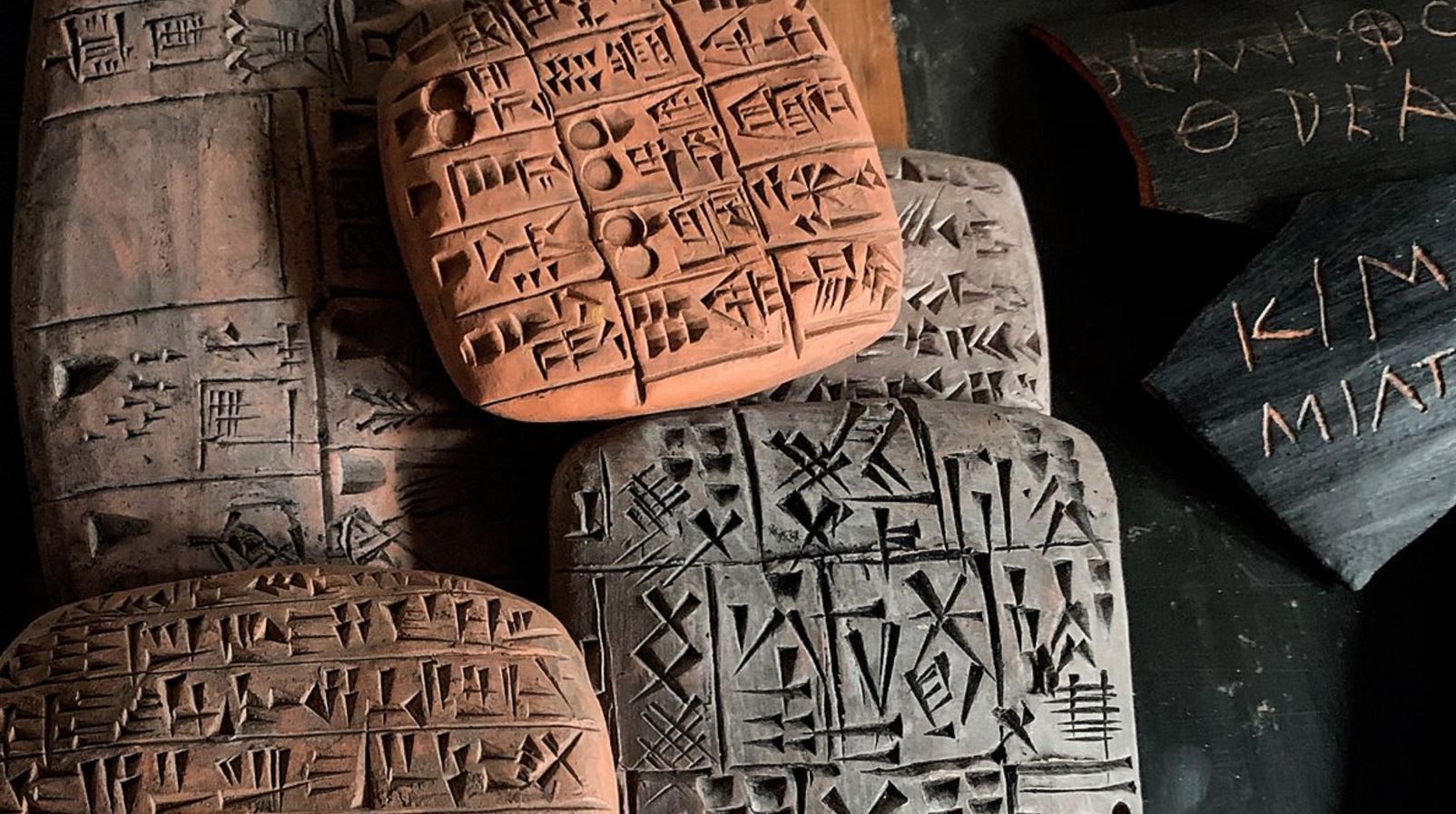
From tokens and tally sticks to pixels and code, the long journey of visible speech
Counting before writing and the grammar of clay
Long before a sign could name a king or a river, people counted grain with pebbles placed in bowls and with notched sticks that paired marks to promises. Traders in early villages of the Fertile Crescent pressed small clay tokens into larger clay envelopes, then sealed them to prove that a shipment matched a bargain. When merchants began to press the same tokens onto the envelope surface to avoid disputes, impression turned into notation. A wet tablet invited a reed to leave shapes that stood for quantities, and with that small leap, memory stepped outside the head and into the hand.
Cuneiform and the city of many signs
In Mesopotamian towns, scribes learning in courtyard schools shaped wedges with steady rhythm, turning a stylus in soft clay to produce patterns that named barley, laborers, and gods. At first, each image resembled the thing it signified, then economy and speed pushed the script toward abstraction. Hundreds of signs served syllables and words across languages, which meant Akkadian, Sumerian, and later tongues could share ledgers and law. The tablet archive became a civic memory, a place where rations, contracts, hymns, and epics survived floods and dynastic changes because fired clay fears little except the shovel.
Egyptian pictures that learned to whisper sounds
Along the Nile, scribes painted and carved figures that glowed with color and meaning. A bird could be a bird, and it could also be a consonant in a name, while a seated man could be both a man and a clue to sound. Hieroglyphs balanced image and phonetic hint with grace, then scribes created a quicker cursive for papyrus accounts that moved through offices and granaries. The writing decorated tombs with stories of voyage and judgment, yet it also ran the daily machine of the state by tracking harvests, temple stores, and wages for crews that hauled stone up ramps.
Indus signs and the riddle of silence
In the valleys of the Indus and Saraswati, seals carried compact signs beside animals and sacred motifs. The sequence repeats across sites with a discipline that suggests a script, yet the corpus is short and the language unknown. Without longer texts or bilingual keys, the rows remain a challenge that fascinates scholars. Even in mystery, they teach a lesson about communication and power, because the presence of seals at warehouses and docks proves a web of trust and registration that tied distant workshops to organized exchange.
Oracle bones and the roots of a tradition
In late Shang courts, diviners inscribed turtle plastrons and ox scapulae with questions for ancestors, then cracked the bone with heat and read the traces. The characters carry shapes that would mature into later forms used for poetry, history, and law. Over generations, brush and silk replaced bone for everyday use, yet the lineage of strokes and radicals endured. In East Asia, the continuity of script shaped culture by allowing scholars to read texts that were already ancient, which tied reform to reverence and kept language and state in close dialogue.
Mesoamerican calendars and voices in stone
On stelae and stairways from the Maya world, carved glyphs record dates with mathematical precision and narratives of kingship and ceremony. The script blends logograms with syllabic signs, which allowed scribes to write poetry, ritual, and history with rich nuance. Nearby cultures from Oaxaca and Central Mexico built their own systems that counted cycles, named places, and celebrated victories. These American traditions show that literacy arises in many places when cities need to coordinate labor, to remember lineage, and to honor time with care.
Alphabet as a portable tool
Along Mediterranean coasts where ships hugged headlands and ports traded stories with goods, a new idea appeared. Instead of hundreds of signs, a small set of letters could record the sounds of many words with flexibility. Phoenician merchants carried this kit of marks with their cargo. Greek speakers added signs for vowels, which made reading more direct and public recitation more accurate. Latin scribes spread a variant across roads and camps, then medieval copyists rounded corners into forms that later printers would adopt for metal type. The alphabet taught memory to travel in small bags and to cross borders with ease.
Brahmi and the flowering of scripts across South Asia
Inscriptions from ancient India reveal a family tree that begins with Brahmi and then branches widely. Over centuries, this lineage produced Devanagari, Tamil, Bengali, and many other scripts that hold the sound and thought of great literatures. The system organizes signs around syllabic units, with vowels that attach to consonants in elegant patterns. Stone pillars, palm leaves, and paper manuscripts carried teachings that crossed mountains and seas, while calligraphers trained hands to respect both sacred text and everyday record.
Arabic script and the breath of the pen
The spread of Islam carried a script that joined letters along a flowing baseline. Calligraphers developed schools with measured proportions that made Qurans, legal documents, and poetry into visual harmony. As the language of scholarship and trade moved from Spain to the Indian Ocean, merchants and jurists wrote contracts and judgments that relied on the reliability of the line. Paper, ink, and reed pens connected caravan towns to port cities, and the script adapted to Persian, Ottoman, and many other languages with flexible grace.
Materials that shaped the look of words
Clay favors wedges, stone favors deep grooves, papyrus prefers dark strokes laid quickly, parchment invites corrections and gilding, and paper welcomes both print and paint. Each surface teaches the hand to move in a certain way, so the form of writing often mirrors the tools at hand. A chisel asks for straight lines and confident blows. A brush invites curves and modulation. A quill rewards patience and consistent pressure. In every age, the marriage of tool and surface produced a style that readers learned to love because it felt natural to the material that bore it.
Scribes and the labor of perfection
Before machines could multiply pages, people did. Monasteries and urban workshops trained copyists to hold a steady pace and to correct with care. Illuminators added initials and borders that turned pages into small galleries, while rubricators guided the eye with color and headings. Errors slipped in despite vigilance, yet the community of readers often repaired them with marginal notes and shared exemplars. The book as object recorded not only text but also the history of hands that touched it.
Paper from bark and rags to mills and rivers
In China, papermaking turned mulberry and other fibers into sheets that took ink well and dried fast. Skill moved along roads to Central Asia and then to the Mediterranean where mills used waterwheels to beat pulp. Rag merchants bought old cloth and sold it to vats that birthed new leaves of memory. Cheap paper changed the scale of writing by allowing letters, account books, school primers, and plays to circulate beyond courts and monasteries. The ledger and the love note both found a home on affordable stock.
Movable type in two worlds
Printers in East Asia experimented with clay, wood, and metal sorts, yet the complexity of thousands of characters favored woodblocks for long runs. In Europe, a smaller set of letters suited a casting system that allowed quick composition and reuse. Workshops that could set and print pages by the hundreds created a new economy of knowledge. Pamphlets spread arguments. Bibles reached households. Scientific diagrams paired words with images that invited replication of experiments. The printed page loosened the grip of error by multiplying reference copies that could be compared across cities.
Standard spelling and the rise of the school
As printers settled on house styles and dictionaries appeared, communities began to agree on forms that reduced confusion. Teachers drilled pupils on letters and sounds, and governments discovered that literacy produced better records and better soldiers. The classroom blackboard joined the town hall in shaping a public that could read laws, receipts, and news. At the same time, literature reached apprentices and maids with voices that spoke to their lives, which widened taste and ambition.
Scripts that traveled and scripts that stayed home
Conquest, trade, and mission carried writing across oceans, while some local scripts guarded valleys and islands with proud persistence. Mission presses built orthographies for languages that had not previously used writing, often with help from native scholars who protected sounds that outsiders missed. In many places, two or more scripts served the same language for different purposes. Choice on the page reflected identity, religion, and history as much as it reflected phonetics.
Women at desks and presses
Diary keepers, letter writers, teachers, editors, and compositors shaped the written record in ways that often escaped official honor. Women managed schoolrooms that taught generations to hold pens correctly, they maintained household accounts with accuracy that kept businesses solvent, and they edited journals that published poetry and scientific notes. The archive of handwritten recipes, midwife logs, and community minutes proves that literacy’s growth depended on steady work often done without fanfare.
Nonalphabetic systems in a world of letters
Syllabaries and abugidas show that sound can be sliced in many ways. Cherokee letters mapped a language rapidly into print. Japanese writing blended syllabaries with logographic characters to capture nuance with agility. In Ethiopia, the Geʽez family shaped consonants with vowel marks into tidy squares. Each solution reflects the structure of speech and the needs of readers. The variety teaches humility, because no single scheme owns clarity for all tongues.
Archives, libraries, and the memory of memory
Storehouses of text outlast dynasties when protected from moisture, fire, and neglect. Clay shelves survived by accident in buried rooms. Papyrus and parchment survived where air stays dry and caretakers value dusting. Catalogs evolved from scroll lists to card files and then to searchable databases, but the goal stayed the same, to let a reader find the right leaf in time to use it. Preservation learned chemistry and climate control, and with those tools it rescued brittle newspapers and fading ink from quiet loss.
Telegraph, typewriter, and the machine rhythm
When electric pulses carried letters along wires, distance shrank in a way that parchment could not match. Operators lived inside alphabets mapped to dots and dashes that trained the ear to hear writing as tempo. Typewriters set words at the pace of fingers across keys, standardizing documents and opening office labor to a wider pool of workers. The uniform line advanced legibility in law and business, and the clatter of keys became a soundtrack of modern administration.
Computers and the second birth of the page
Digital systems rewrote the idea of a page by treating characters as numbers in memory. Encoding schemes tried to fit many scripts into narrow slots, then a global standard emerged that gave each character a place in a vast table. With this step, a screen in one country could show a poem from another without distortion. Word processors separated content from presentation, search engines found strings inside mountains of files, and hyperlinks let readers wander through webs of citation without leaving a chair.
Fonts as voices and layout as argument
Typeface design matured into a discipline that blends art with readability. Serif families whisper tradition, sans serif faces speak with directness, and scripts carry the warmth of the hand. Designers space letters and words to guide the eye with less effort, and they choose line length and leading to respect how attention ebbs and flows. Good layout makes an essay feel honest before a reader finishes the first paragraph because clarity on the page suggests clarity in the mind.
Emoji, icons, and the return of the little picture
Text messages and social media invited small images that add tone and context to short lines. Smiles, hands, creatures, and objects behave like glosses that travel beside words. They do not replace grammar, they cushion it, reducing confusion where brevity might seem abrupt. In this sense, the present converses with very old habits, since the first writing also leaned on pictures to anchor meaning, then learned to compress them into sound.
Speech to text and the circle of voice and page
Software now turns spoken language into letters with growing accuracy, then reads text aloud to eyes that need rest or to readers who prefer the ear. Dictation returns to a dignity it enjoyed in courts and monasteries, while screen readers open archives to those who cannot see the page. Writing becomes a flexible interface between minds, where form changes to meet need without losing substance.
Bias, access, and the ethics of the line
Who gets to write and who gets to be read remains a moral question as much as a technical one. Censorship, poverty, and schooling decide which voices enter the record. Projects that digitize manuscripts from many regions, that fund community newspapers, and that teach children to code and to compose expand the chorus. The future of writing depends on fairness, because a narrow archive produces a narrow memory.
Decipherment and the art of patient listening
Rosetta like moments require luck and stubborn work, yet many breakthroughs have come from long attention to sign order, to repetition, and to bilingual clues. Epigraphers test hypotheses with lists and patterns, compare hands across stones, and build dictionaries one shard at a time. Success grants more than a translation, it restores a voice to a culture that waited centuries for a new reader.
Preservation in the age of plenty
Today the problem is not scarcity of pages but the fragility of formats. Files vanish when drives fail, links rot, and proprietary systems age out of support. Archivists answer with open standards, mirrored repositories, and printed backups for records that must survive centuries. The lesson from clay and parchment still holds, that durability is a choice made with materials, routines, and budgets, not a gift that arrives by chance.
Education that treats writing as shared craft
Literacy grows when schools pair mechanics with meaning. Lessons in pen grip and keyboarding help, but real progress arrives when students write for audiences beyond the gradebook, when they edit one another with kindness and precision, and when they read across time to learn how elders solved similar problems. A letter to a council member, a caption for a museum exhibit, or a translation for a neighbor can turn practice into citizenship.
Numbers, music, and drawings that count as text
Notation systems extend the idea of writing into math, science, and art. Equations compress logic into symbols that can be checked step by step. Musical staffs capture rhythm and pitch so that a song can cross centuries intact. Engineering drawings communicate tolerances and shapes that allow distant factories to build parts that fit on first try. These disciplines prove that writing is any stable set of marks that lets one mind meet another exactly.
What writing changed inside the brain
Neuroscience suggests that literacy recruits circuits built for vision and language into new cooperation. Practice speeds recognition, which frees working memory for deeper tasks like inference and plan. Bilingual readers show flexibility that helps in other kinds of problem solving. While debate continues about precise mechanisms, classrooms and clinics agree that steady reading and writing open cognitive paths that benefit learners across subjects.
Community scripts and the pride of letters
Revival movements teach new generations to read ancestral scripts that political pressure once discouraged. Street signs gain dual names, newspapers launch in languages that had been confined to family kitchens, and type designers draw digital fonts for scripts that had only existed in handwriting. This work returns dignity and heals gaps, since a community that sees its letters on public walls feels recognized and invited.
Artificial intelligence and the algorithmic scribe
Programs now complete sentences, summarize reports, and translate between languages with startling speed. These tools can free time for judgment and for creativity, yet they also require guardrails. Writers must learn to verify, to cite sources, and to maintain voice in a world where suggestion arrives instantly. The partnership can be fruitful if craft remains in charge, because machines excel at recall while humans excel at aim.
The thread that binds hand, eye, and promise
From clay tokens to cloud storage, writing carries a simple pledge, that a mark today will carry meaning tomorrow. Each medium, script, and school adds a stitch to that thread. When we write with care, we join a lineage that keeps strangers honest, keeps families in touch, and keeps knowledge alive when memory sleeps. The future of the written word will look different on the surface, yet its heart will stay the same, a quiet bridge between minds that turns breath into sign and sign into understanding.